Showing posts with label VISTA Profile. Show all posts

Friday, February 6, 2015

Alum Spotlight: Monica Palmeira

Monica signing her VISTA oath at PSO!
Monica Palmeira was the first VISTA at the Marian Cheek Jackson Center in Chapel Hill, 2012-2013. During her year of service, she helped the young non-profit improve its organizational systems and strengthen a partnership with Heavenly Groceries, a food ministry serving the Northside community. Through her work there, Monica learned she is “passionate about housing and neighborhoods.” When her term ended in 2013, Monica headed west to Sacramento, California. An internship with Housing California led Monica to her current position at the California Coalition for Rural Housing, one of the oldest affordable housing coalitions in the country. We spoke with Monica recently to learn more about her work and the lessons she took from her VISTA experience.

Before we talk about what you’re doing now, I wanted to ask if you have been back to the Jackson Center lately. Have you?

Monica (first row, far right) with the 
Heavenly Groceries team.

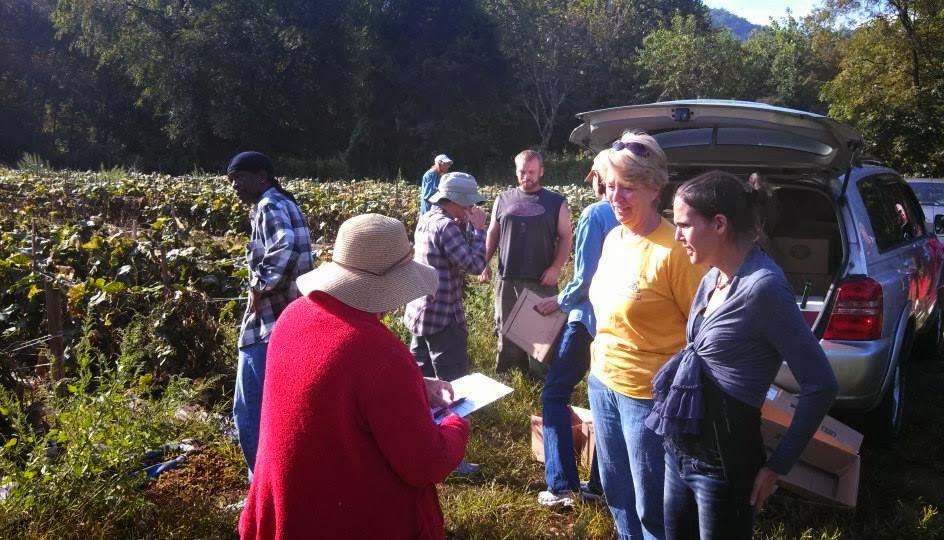
Actually, I visited last fall for a friend’s wedding. And I went by Heavenly Groceries to say hey to Ms. Gladys and they had just gotten new t-shirts so that was really cool. Pretty much every time I go back I’m given some kind of responsibility at the food ministry - I’m required to go pick up food or do something. Whenever I see Ms. Gladys she immediately puts me to work… it’s the best way to be welcomed.

That’s great. So tell us about the work you are doing now.

I am currently working as a Policy and Programs Specialist at the California Coalition for Rural Housing. Our job is to advocate on behalf of our members, which are primarily non-profit affordable housing developers. We try to get policies on the local and state level to incentivize and facilitate the building of affordable housing throughout rural California. So it’s a really cool perspective on this issue, but it’s really a departure from the neighborhood-based work I was doing at the Jackson Center, so the two experiences really complement each other. I’m getting a ton of experience and exposure to issues, but I’m finding myself missing a lot of aspects of my work at the Jackson Center-- like having a strong connection to one place.

What’s your role at the coalition?

At a small non-profit like ours [6 staff], it’s so hard to define roles, but I basically work across all our programs. I host a lot of convening and coalition-building events and conversations, particularly for the policy aspect of things. I plan our annual conference for example. This job has also allowed me to travel throughout a lot of California, particularly in the San Joaquin Valley.

One of the big things I’ve been really involved with: in California we have a pioneering Cap and Trade program to reduce greenhouse gas emissions. The money that comes out of the options proceeds is going into this greenhouse gas reduction fund, which can fund other things, including affordable housing. So it’s a really new way of thinking about housing in terms of how can housing be a strategy to reduce greenhouse gas emissions: where do you locate housing so that people drive less? How do you co-locate housing and transit so that people are less dependent on cars? What are the impediments to walking and biking? I get to convene people to strategize how we can do this and design programs especially that address these issues in rural areas. 

How did you wind up working with that organization? 

When I moved out here I knew I wanted to work in housing and -- similar to the way the VISTA program can work, I got an internship experience that let me get my foot in the door. And through that I met the people I work with now.

It’s funny ‘cause my VISTA experience has been a cool thing to talk about. My boss actually moved out to California from Connecticut as an AmeriCorps person, and several of the executive directors of organizations or housing developers we work with-- a lot of them came to California through the VISTA program. So it’s been a fun connection to say we’re all VISTAs and we have a kind of VISTA pride. 

So it’s a program that’s been around for a long time and I think that it has a legacy of plugging a lot of people into nonprofit work.

Yes, VISTA is celebrating its 50th anniversary this year.

Oh yes, and some of the people I was referring to may have been part of some of those first classes! There are VISTAs from a long time ago, and they’re still here and working for some of the organizations they served with.

Wow! Well, what do you like about living in California and what do you miss about North Carolina?

Monica and fellow Chapel Hill VISTA
Sarah-Abdul Rauf at a 2013 Habitat build.
Oh my gosh, I think about this all the time. What I love about California is that it’s incredibly diverse. People are from everywhere, and there are lots of Spanish-speakers, which for me is a really cool thing. My family is Portuguese and growing up [in Kinston, NC], I didn’t know any other kids whose parents were immigrants. But here that’s very normal and in some ways it’s very comfortable to be here.

I get to travel a good bit, mostly south of Sacramento in between the mountain ranges in what’s called the San Joaquin Valley. That region reminds me more of home, especially eastern North Carolina where I grew up. When I go to San Francisco I feel like I’m in a completely different world, but in the San Joaquin Valley I feel like I can navigate the world a little easier. 

I definitely miss the simplicity of life in North Carolina. I miss the warmth of people and how people congregate in like Church traditions. Here there are so many different traditions and a mix of people, which is great, but you miss the sense of unity in some way. North Carolina is very much on the table to move back to, but I love both places as they each have unique opportunities and experiences to offer.

What advice do you have for current VISTAs contemplating their next steps?

Yeah - VISTA is tough because it’s only 1 year, and that deadline can be very daunting. But try to see that deadline as a launching pad or trampoline - try to make the most of that year and think of it as a springboard more than impending doom.

I definitely had a lot of anxiety when I moved out here not knowing anyone. So I just started going to panel discussions and volunteering for non-profits and learning to network which helped me when I interviewed for an internship. So just put yourself out there as much as possible and use this year as an opportunity to push yourself out. 

What’s next for you?

I am looking to doing graduate school in a year or two and getting a master's in city and regional planning. I have a few schools that I am looking at out here but UNC is also a top choice--- and I could even work in Northside again!

Especially having a different perspective now, it would be interesting to go back to school. This job certainly helped but my VISTA experience most certainly helped with that. Studies are enhanced by real life experiences and nothing beats that experience, by doing the work you are able to see where the gaps are and where you want to focus your energy on. I give VISTA credit for helping me realize what I enjoy and what I am passionate about that I can focus on and make the most of any educational opportunities in the future.

This spotlight is part of the latest issue of the VISTA Alumni Network Newsletter

Tuesday, July 8, 2014

There is something special about Southeast Raleigh

In June and July, North Carolina Campus Compact will be publishing articles written by our VISTA members. These pieces give readers access to first-hand experiences and reflections of VISTAs serving throughout the state. We are excited for them to share their perspectives on community and service with us! 

Please note: Any opinions expressed on the VISTA VIEW blog are those of the authors and do not necessarily represent the views, opinions, or policies of North Carolina Campus Compact, the AmeriCorps VISTA program or the Corporation for National and Community Service.

By Camille Smith
NC Campus Compact VISTA at NC State University and the Raleigh College Center

When most people think of the Triangle area of North Carolina they think of tobacco road basketball rivalries, an exciting academic hub full of research and resources, great barbeque, and southern hospitality. When I became a Raleigh transplant four years ago, I quickly learned that this area is so much more than that. Raleigh truly is a magical place rich with history, creativity, charm and a small town feel with big city thinkers. I had been in Raleigh for two-and-a-half years before I was exposed to Southeast Raleigh. As a student at NC State, I had an opportunity to explore the different parts Raleigh via several internships in town, events, and social outings, but had never spent extensive time in the southeast area.

As I progressed through college, the reality that I was a student who had beaten the odds to get into college became more evident to me. I was one of those college students with limited resources and it was a miracle that I had the opportunity to attend an institution as full of resources as NC State University. My parents could not afford to send me to college so when I was in high school; I did everything in my power to ensure that I had a scholarship out of my hometown of Anderson, South Carolina. I worked hard to keep my grades up while excelling in volleyball. Like many minority high school students, I believed that my only ticket to college was through a sports scholarship. Luckily, I earned one at a historically black college, Virginia Union University. Although I loved my university, I decided to transfer at the end of my freshman year because I realized that what I wanted out of college was not offered at my university.  In 2010, I began as a sophomore at NC State University through a generous financial aid package and the grace of God. Almost immediately after my arrival to this behemoth state-funded school, I realized that students like me were rare and far between. For the first time in my life, I felt completely out of place and overwhelmed with a school environment.  I then began to reflect on my life, and how I got to this point. If it were not for the several mentors, teachers, counselors, friends, and family, in my life I would not have made to college nor would I have graduated. If it was not for their continuous support and guidance, I would not have seen it through and I would not have capitalized on the opportunities offered at NC State University. They showed me that, despite my background or upbringing, I not only belonged in college but could succeed.

Chavis Community Center
My experiences in life led me to my AmeriCorps position at NC State University. My title is Program Coordinator for an initiative created by Raleigh area higher education institutions, businesses, and community partners (also referred to as the Raleigh Colleges and Community Collaborative) entitled the Raleigh College Center. We believe that by promoting higher education access to under-represented youth in our community (specifically in Southeast Raleigh), that the cycle of poverty can be significantly reduced. I had the privilege of splitting my time between both NC State and the Chavis Community Center. My intention was to pay it forward to other youth who were like me, who did not have all of the resources, but who needed that push or exposure to knowledge on making it to a higher education institution.  What I have learned in this process is much more than I have expected!


A Brief History of Southeast Raleigh

First, I want to say that the Southeast area, is Raleigh’s best kept secret. The potential that lies in this region is just now being re-realized by city administrators, who are beginning to pour money and resources into this community, including the Raleigh Colleges and Community Collaborative.  When I say that the potential of this area is being “re-realized”, I mean that the residents of Southeast Raleigh understand their history and share a rare camaraderie that is deeply rooted and culturally aware, and it seems as though leadership in Raleigh has taken notice. I have been so fortunate to work in what I deem this community’s hub- The John Chavis Memorial Park and Community Center. Before I continue, I believe that it is only appropriate to give a brief history, for one to wrap their head around the amazingly talented children that I work with, who have been born and raised in this community.

Longtime Chavis staffer
and local resident Larry Wells
John Chavis Memorial Park is the largest community park located within walking distance to downtown Raleigh. Based on the history of this park, it is my belief that there is no better home for the Raleigh College Center! The park was established in the late 1930s by the city of Raleigh to serve the recreational needs of African-Americans during the Jim Crow laws. Prior to desegregation, Chavis was the largest recreational facility that was open to blacks from Washington, D.C. to Atlanta, with amenities such as a large swimming pool, playgrounds, a football field with seating, a baseball field, a carousel,  and picnic shelter.  The history that is embedded in the community center and the grounds around it is rich and frequently celebrated and echoed throughout the center on a daily basis. At least once a week I meet a new person that shares their John Chavis Park story. When I think of someone who has seen the transformation that the neighborhood has gone through, I think of twenty year Chavis Community Center staff member, Larry Wells, who grew up in the neighborhood and has frequented the park since 1961. In my time as a VISTA Larry’s insights about what makes Chavis what it is today, and his age-old wisdom have helped me put my volunteer duty into perspective. When speaking with other patrons of the Jim Crow generation, their eyes brighten up when bringing up memories of riding on a children’s train that toured the park, or learning to swim in what was then, the only pool that blacks could use in the region. It was a civil rights hub, where the Student Non-Violent Coordinating Committee (SNCC) organized marches from the park to downtown Raleigh. Ultimately, Chavis served as a safe and happy space when our nation was going through the civil rights movement.

Once desegregation was achieved, Chavis facilities virtually became frozen in time, and according to Mr. Wells, in the 1970s and 1980s the Southeast neighborhood began to experience higher crime rates.  He remembers attending high school at Ligon (now known as Ligon Middle School) when it was a thriving neighborhood in the early 1970s then returning later in the decade and becoming wrapped up in what the neighborhood had transitioned to. This once thriving historically black neighborhood surrounding John Chavis Park, was now becoming an alienated sector of Raleigh, with limited resources, and a growing pool of untapped potential. As Bob Geary wrote in a 2011 Indy Week article:

“Southeast Raleigh is a quarter of the Capital City. About 85,000 people live here, but they're not all the same. It's one of the fastest-growing parts of Raleigh, but some neighborhoods are in decay. It has a reputation for crime. There is crime. And poverty. You don't have to look hard to see it. But even in the worst parts of Southeast Raleigh, there's hope. In most of Southeast Raleigh, there's very little crime and the neighborhoods are middle-class—middle-class and still predominantly black.”

In local residents and Chavis staff members like Mr. Wells, I view this “hope” that Geary describes. There is a felt consensus in Southeast Raleigh for a yearning of growth and re-making it into the gem that it once was fifty years ago.

Fast forward to 2011

Southeast Raleigh is a hotbed for growth and opportunity, and several organizations have been created to uplift it and its residents. In 2010 the Bill and Melinda Gates Foundation, began to show interest in alleviating poverty in Southeast Raleigh. Businesses, community organizations, and all six colleges and universities in Wake County began to come together to rise to the challenge. Our community banded together to gain a $1.2 million dollar grant to invest in human capital through raising awareness about college access.

Cue the birth of the Raleigh Colleges and Community Collaborative and the subsequent establishment of the Raleigh College Center in 2012!

Raleigh youth visit Wake Tech, a member of the collaborative.
I serve as the second AmeriCorps VISTA in the growth of this initiative. My duties have been to expand our college access/youth serving network, collaborate with community partners, and act as Program Coordinator for the Raleigh College Center hosted workshops at the John Chavis Community Center.  What has been the most enriching part of this experience has been the ability to speak candidly with other youth serving individuals and youth in our community. Their perspective of Raleigh is both refreshing and innovative. In my opinion, these people are the true heroes of the future of our community. The youth that I work with are so vivacious and full of ideas for the future. Their savviness in communicating via technology is equally a generational barrier and an efficient method of communication and collaboration in the future. From my experience, I have found that the youth in southeast Raleigh, like many all over the country, have a separate and fresh way of
communicating with one another, but in some cases lack the confidence and tact that is required in speaking to others in person and in a professional setting. The Chavis Community Center provides a safe space for the teens in the area to build confidence through verbal communication, recreational activities, and by articulating their dreams at the Raleigh College Center.  The initiative and its partners have just begun to scrape the surface of the untapped potential of our community’s youth.

The College Center's 2nd Annual Etiquette Dinner
Within the past six months we have had an opportunity to connect with community partners such as Youth-Thrive, The WELL (Wade Edwards Learning Lab), Neighbor to Neighbor Outreach, YMCA Y-Achievers, 4-H, Habitat for Humanity, and more. We have collaborated with our partners to be innovative in the way that we expose our students to college. We have done everything from college visits, free test prep, personal finance courses, a local college fair, application readiness workshops, and even an etiquette dinner where college students taught our students the important of etiquette and
manners in today’s society!. 

The VISTA program with NC Campus Compact has allowed me to experience so many opportunities, that I otherwise wouldn’t have experienced at this point in my professional career. In the process of planning and implementing programs for the Raleigh College Center, I have been able to connect with professionals in higher education, local government, local educators, and the nonprofit field. Together, each of these people has contributed to the well-being of the students and families of Southeast Raleigh. My grandmother once told me that it takes a village to raise up a child, and the people whom I have encountered in my year of service serve as the village that has indirectly impacted the youth. Because of them, I was allowed to gain professional skills in public speaking by being asked to conduct college access seminars and speak in front of city council on the 2014 Mayor’s Day of Recognition for National Service. I have been able to network with Raleigh youth-services leaders at Youth-Thrive Training events. I even was asked to serve on a 40,000 Book Drive in partnership with Wake County Public School System and Wake Up and Read, where we raised well over our goal with 65,000 books!
Camille and other AmeriCorps members took part in the
Mayors Day of Recognition for National Service.

All of these experiences have shaped my viewpoint of Raleigh.  Although Raleigh is not short of its flaws and historical obstacles, it is quickly changing, and on the cusp of what many believe to be an urban explosion full of growth and even more opportunity. From my observations, I believe that it is extremely crucial to never forget the historical scars that have been left on the people of Southeast Raleigh, and use what has happened in this community to grow forward and in a positive manner.

As I move on to other places and other opportunities, I will never forget how my experience with poverty in Southeast Raleigh as an AmeriCorps member has been one of the most transformational seasons of my life. When I return to this community to visit, even after the current John Chavis Memorial Park and its Community Center transforms into the rightful community hub of the downtown Raleigh area, it is my hope that this community is still laced with a strong sense of history and strength that it has today. Being a VISTA in Raleigh during this time has opened my eyes to how I want to be a leader in my professional career and I have this amazing community to attribute to that.

Monday, June 30, 2014

Obsessed with Step

Throughout the month of June, North Carolina Campus Compact will be publishing articles written by our VISTA members. These pieces give readers access to first-hand experiences and reflections of VISTAs serving throughout the state. We are excited for them to share their perspectives on community and service with us! 

Please note: Any opinions expressed on the VISTA VIEW blog are those of the authors and do not necessarily represent the views, opinions, or policies of North Carolina Campus Compact, the AmeriCorps VISTA program or the Corporation for National and Community Service.


By Jess-Mara Jordan, NC Campus Compact VISTA at the University of North Carolina at Asheville and Open Doors of Asheville.

In the past eleven months, I have had many wonderful experiences and opportunities but one of the most memorable I’ve had stemmed from the fact that, at times, I can be a little bit loud and a tad bit “extra.”

This past January, while I was in full MLK Day of Service planning mode, the rest of the school was in full Homecoming planning mode. My alma mater’s Homecoming was in the Fall so the idea of a Winter Homecoming was very foreign to me. Nonetheless, the week’s events promised to be nothing less than extravagant. I was very excited. One day, when I went to the Intercultural Center to visit my supervisor, he was meeting with the Homecoming Step Show committee. Naturally, I offered to come back later, but they insisted I stay because they were “just talking about me.” We all know that statement can go either way. I expressed how excited I was that the step show was a regular part of their Homecoming celebration even though there are currently no National Pan-Hellenic Council organizations or step teams on campus. Little did I know that in the next few seconds they would make my whole day, week and possibly year with six simple words: “Will you host the step show?” Without hesitancy, I exclaimed “But of course!” As I mentioned earlier, I’m guessing my outgoing personality and love of the spotlight were some of the reasons they asked me to be their host, but little did they know that stepping is also my passion and has been for 13 years.

My love for stepping started at the age of 10. I was always one to hang out with the big kids so even though I was in 5th grade, many of my friends were already in middle school. In my neighborhood, it was ritual for kids to get home and rush to do their homework and other chores just to get outside and play. My friends and I would always be making up games, playing double-dutch, riding our bikes, or playing on my backyard jungle gym. One evening, my friends and I decided to go down to Brittany’s house. Brittany was in 7th grade and was like a cool, big sister to us. Brittany and her friend Maria were practicing this really cool dance-but-not-dance, cheer-but-not-cheer like thing that I later came to know and love as stepping. I was so fascinated and begged them to teach me. I caught on pretty quickly and from that day forward, my mother can attest, I have not stopped stepping. I would step in the house, in the street, in the grocery store, under the dinner table. I was, and still am, obsessed.

Jess-Mara (center) with a gospel step team she helped start at Elon.
When I moved on to middle school, I auditioned and made the PVMS Pride Step Team, the same step team that Brittany and Maria were on, and I remained a member for all three years. When I moved on to high school, I joined the Rapid Thunder step team and participated during my Freshman and Sophomore years. My Junior and Senior year, we unfortunately didn’t have an advisor and therefore weren’t able to have a team. In addition to my school step teams, I was also a member of Steppers in Unity, my church’s step team. Even in college, I kept stepping. My sophomore year I started “Order My Steps,” a step team under our gospel choir, and remained the President until I graduated. You can see why I was so excited about hosting this step show. Although the actual event was a great time, it’s the many other events that followed that have made this year truly special.

After the step show, I was contacted by Ms. Smith, a teacher’s assistant at one of the local elementary schools. She initially contacted me to get information on how to get the step teams that performed to come and do a workshop with the kids. When that proved too difficult, I offered to come and do the workshop myself. On one Tuesday morning I spent 2.5 hours with the 3rd, 4th and 5th graders at Isaac Dickson Elementary School teaching them the history of step, my involvement with step and how they too could become steppers. It was an amazing day. A few months after, I got another email from Ms. Smith saying:

“I just heard from a fifth grade teacher this week that the 5th graders are obsessed with stepping now! When they went on their class trip to DC they stepped at every rest stop! One class is also going to incorporate stepping into their graduation ceremony! I had no idea that your talk with them made such an impression, but it did!”

I was elated. I couldn’t believe that my obsession had spread so quickly and was taking this school by storm. Also in the email, I was asked to come to their End of Grade (EOGs) Testing Pep Rally to step. Unfortunately, I was out of town for that event, but I sent in a video of me stepping and encouraging them to do well on their EOGs to be played at the pep rally.

To this day, whenever I visit the school, I’ll hear students whispering “Hey, that’s the girl from the video!” No big deal, but I’m kind of a local celebrity. As Ms. Smith mentioned, one of the 5th grade classes had incorporated step into their graduation assembly and even asked me to come help and fine tune it. However, something strangely amazing happened. When I got there and they showed me their step, it was PERFECT! You could tell they had been practicing so hard and that they were really enjoying what they were doing. Instead of changing anything about the step, I taught them a new one to be done at the end of the assembly.

Watching them perform at their graduation ceremony a week later brought tears to my eyes. It took me back to when I too was in 5th grade and finally found my niche. I wasn’t good at sports like my brother and sister, I wasn’t very graceful in dance like my friends, and I was too girly for martial arts. But I could step and I could step well. Now 13 years later, I am able to mix the two things that I am most passionate about, children and stepping.

One of the things that I remember from our Pre-Service Orientation for incoming AmeriCorps VISTAs last year was our leaders telling us to find that work-life balance and incorporate what we love into our year of service outside of our work hours. As a returning VISTA for 2014-15, I plan to help develop an after school step club at both the elementary and middle school this upcoming school year, offer step as a physical education activity at the alternative middle school and teach a step workshop at an end of school year youth conference. And I owe it all to the fact that, at times, I can be a little bit loud and a tad bit “extra.”

Tuesday, June 24, 2014

AmeriCorps VISTA: The Key to Opportunity

Throughout the month of June, North Carolina Campus Compact will be publishing articles written by our VISTA members. These pieces give readers access to first-hand experiences and reflections of VISTAs serving throughout the state. We are excited for them to share their perspectives on community and service with us! 

Please note: Any opinions expressed on the VISTA VIEW blog are those of the authors and do not necessarily represent the views, opinions, or policies of North Carolina Campus Compact, the AmeriCorps VISTA program or the Corporation for National and Community Service.

Becoming an AmeriCorps VISTA 
has opened the door to so many 
opportunities and helped me find 
my purpose in life. 
By Brittany Johnson, NC Campus Compact VISTA at the Hospitality House of Boone

Before serving in AmeriCorps I knew nothing about the program and did not even know it existed. I had no idea about the opportunities it presented and how it would change my life.

Originally from Eastern NC, I grew up in a very small town that I never quite fit into. After a failed attempt at college right after High School, the start of my 20’s was filled with uncertainty and confusion. At 22, I decided to go back to school and figure out my purpose in life. I transferred to Appalachian State University my junior year of college, and since then things have started falling into place. Majoring in Public Relations, I wasn’t 100% sure what I wanted to do after graduation as there were many paths I could take. It wasn’t until my last semester of college that my path became clear.

After loading over $3000 cans donated to 
the Hospitality House, the late Ron Hurst
 and I stopped to take a photo together. 
Ron was a resident at the HH who inspired me
 and reminded me that he and others like him
 are why I do my job. He is greatly missed. 
For my senior capstone project, I was paired with Todd Carter, Director of Development for Hospitality House of Boone, to work on a campaign to raise funds and awareness for the nonprofit. After being educated on the homeless and poverty issues in Watauga County and receiving a tour of the amazing facility, I was hooked. I immediately wanted to know more and how I could get involved. Todd was an amazing mentor and his passion was so strong. He inspired me to look beyond my own assumptions of poverty and homelessness and open my eyes to the reality. Throughout the semester- long project I continued to learn so much and develop a passion of my own. I’ve always enjoyed helping people but it was more on a customer service level. Now, I have reached a level that was beyond my imagination and discovered my purpose: to serve others in need.  Todd informed me about the AmeriCorps VISTA program and how Hospitality House was trying to apply for a VISTA to manage a very unique project.  Filled with excitement, I knew this was the program and project for me. After a lot of research, I applied and became the NC Campus Compact AmeriCorps VISTA for Hospitality House of Boone, and it has been the best decision I’ve made since deciding to go back to college.

Since August I have been working on the Enterprise Project, a thrift store that will act as an economic
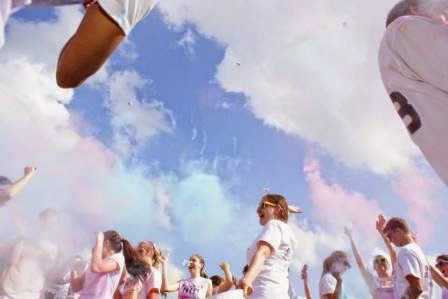
Celebrating a successful fundraising 
event at the Color Blast 5K, raising over
 $8,000 for my project and Western
 Youth Network, another community nonprofit!
resource to Hospitality House as well as a training facility for building job skills and financial literacy for Hospitality House clients. Starting a business from the ground up is not easy. Eager to apply my marketing and PR skills, I had to reroute that energy into writing a business plan, something I never had done before.  In addition, the location that was originally promised to us by a donor fell through, leaving us with no prospects for the store location. Refusing to quit and be discouraged, I continued to move forward, determined to stop at nothing until the project was successful. In February, I started planning a 5K and a Flapjack Fundraiser to raise money for the business startup costs.  The fundraisers were a success and we earned over $4,100 for the store. The hard work finally started paying off. On June 1st we signed a lease for our new thrift store, Welcome Home Thriftique, where we will sell upscale items such as furniture and home goods. It is so exciting to see this vision come alive. As the repairs are made and walls are painted, what seemed to be impossible at one time is now coming in to focus.

Looking back on a challenging yet amazing year, I realize that I have grown so much. The VISTA program has allowed  me to apply the skills I have in a field that suits my interests and every day I learn something new. Without the amazing staff at Hospitality House, the support of this beautiful community, and the guidance and wisdom of two amazing VISTA supervisors, this would not be possible. The lessons I have learned about the business of nonprofits, poverty issues, and the people I serve are priceless. Fueled by my passion, I work hard for something I truly believe in and realize that I am one of the lucky ones who get to do what they love every day. Being a VISTA has taught me to go beyond my comfort zone and realize my own potential and that with hard work and dedication, anything can be done. I am happy to announce that I have signed up for a second year in this program and I cannot wait to see what the next route of this journey has in store.

Monday, March 17, 2014

VISTA Elizabeth McIntosh helps Appalachian girls dream new stories with PAGE

VISTA
Elizabeth McIntosh
Though originally from sunny Winter Park, Florida, NC Campus Compact VISTA Elizabeth McIntosh is no stranger to the Appalachian mountains. Elizabeth's mother runs a summer camp for girls, Camp Glen Arden, in Tuxedo, NC, where Elizabeth has spent every summer of her life. Now Elizabeth works just 70 miles from Tuxedo in Madison County, and is following in her mother's footsteps.

In partnership with the Madison County School system, Elizabeth works with PAGE, the Partnership for Appalachian Girls Education, a project with a mission to foster 21st century literacy, social equity, and economic opportunity for Appalachian girls and young women. PAGE was founded in 2010 and has since hosted 50 girls (grade 6-9) in their summer camp program. Elizabeth officially began her year of AmeriCorps service in August of 2013 as PAGE's first VISTA member, but she had previously worked with the organization's summer camp through a Duke University internship in 2012, and then as part of the strategic development committee from 2012-2013.

Though the learning curve for institutional development is steep, Elizabeth's educational background has made the road much more navigable. Elizabeth graduated from Duke University in May of 2013 with a Bachelor of Arts in Public Policy and minor in History. Now as the PAGE VISTA, Elizabeth wears many hats, but all with the goal of building capacity and long-term sustainability for the PAGE program so that it can meet the educational needs of students in rural mountain communities.

Elizabeth with PAGE participants
Elizabeth's work so far has been quite prolific. Since PAGE is currently a project of Duke University's Social Science Research Institute, she has been working with a Duke Research Fellow on a community needs assessment. Elizabeth has also had a hand in developing a strategic plan for PAGE with a goal of helping the organization become an independent, 501c3 non-profit within the next 5 years. She has designed and implemented a marketing approach that includes building key stakeholder relationships, securing grant funding, and creating a social media and communications presence. Elizabeth has already garnered over $18,000 in support from funders since she began her work in August. As a relatively new program, Elizabeth says, "It is important to take the time to get the word out [about the program] and develop community relationships."

Currently, she is spending a large majority of her time recruiting. Partnered with Duke Engage, she is looking for both Duke students to intern with PAGE during its 6-week summer program, and also looking for middle school girls from Madison County to enroll in PAGE's summer program. Though summer is still several months away, these middle-schoolers are jumping at the opportunity go to camp, and -- eventually -- to college.

Elizabeth recalls a conversation one mother shared about her daughter Laura's recent visit with the college counselor. The counselor asked the ninth-grader (and PAGE participant) to list ten colleges she was interested in, and the girl said firmly, "I want to go to Duke." According to Laura's mom, when the counselor laughed and encouraged Laura to add nine other schools to that list, she "looked straight at the man and [said] 'No! I don't need any more schools. I am going to Duke!'"


For Elizabeth, this story embodies PAGE's mission. This program, she says, is "allowing [these girls] to achieve their dreams, even in the face of much adversity. It would not have mattered to me if this girl said Duke or the local community college, as where she wanted to go. The point is that she is following her dreams whatever they may be, full force ahead."

As a strong advocate for following your dreams, when Elizabeth heard about the NC Campus Compact VISTA position, she didn't hesitate to apply. "Few graduates get to say they have a hand in developing and running a nonprofit organization, while also making a difference in a community, and I get to say I do both!" she exclaims.

She enjoys spending her time outside of work simply being outside. All outdoor activites -- from exercising to rock climbing to sitting on a porch with friends -- are favorite past times. Water sports, especially scuba diving and water skiing, also hold places close to her heart. "I am a Florida girl after all!" she jokes.

For Elizabeth, the draw of working outside during the summer at camp, was also particularly enticing. If the PAGE program also sounds like something you would be interested in, you can check out their website, follow them on Facebook or Twitter, or send Elizabeth an email to provide you with more information and add you to their e-newsletter.  Also, if you are interested in volunteer opportunities, please feel free to reach out. As PAGE has grown they are always searching for more and more people to help with various aspects including counseling middle school girls and fundraising, all to provide the best educational enrichment program to middle school girls possible.

Elizabeth hopes to extend her VISTA service for one more year with PAGE. After that, she plans to go to law school and then either continue her work in the non-profit world or work to make change at the government level. She states, "My passion is making the world a better place; I am just undecided as of now, the best place for me to do this."

What she does know is that PAGE serves an area that is near and dear to her heart. "I am...a firm believer that any child can accomplish whatever they set their mind to regardless of circumstance and I want to be a part of an organization that help[s] children know that." These young girls at PAGE are dedicated, creative, and bright. Through Elizabeth's own dedication to this program, she has not only acted as a role model for these girls, but has developed the groundwork for their future successes.

Elizabeth says that Laura's story is becoming wonderfully common, and offers some wisdom about their future: "Watch out world, here they come!"

Monday, March 10, 2014

Hospitality House VISTA Brittany Johnson lives to serve

VISTA Brittany
Johnson
Though VISTA Brittany Johnson is from the close-knit community of Dunn, North Carolina, she has found her own community in Boone, North Carolina. Brittany attended Appalachian State University, graduating with a degree in Public Relations and Sociology.

While in school, she wanted to get more involved with the greater Boone community, having developed a passion for service in her own hometown growing up. She soon found the campus organization, the Appalachian Popular Programming Society, which is the campus event programming board, and eventually became the Vice President of their Public Relations team. Through this office, she worked often with the student organization, Appalachian and the Community Together, more commonly known as ACT. An apt acronym for Brittany, and act she did.

She started volunteering at the Hospitality House of Boone (HHB), a nonprofit crisis agency helping those living in crisis, poverty and homelessness rebuild their lives. Brittany volunteered at least three times a week, working at the front desk, and helping where needed. Brittany now serves as the NC Campus Compact AmeriCorps VISTA in the role of Project Manager for Hospitality House.

Currently, Brittany is spending most of her time organizing a a 5K fundraiser run on Memorial Day weekend. The funds raised will go to support Brittany's primary goal; creating a Hospitality House Thrift Store that will act as a source of sustainable revenue for the non-profit.

In fact, Brittany will soon put out a call for volunteers to help with the upcoming 5k, both with day-of coordination, as well as preparatory work like logistics planning, advertising design, and social media management. Earlier this year, Brittany was on the planning committee for Appalachian State's Annual Hunger Games Food Drive Event. Through the Hunger Games, Brittany helped raise over 3000 pounds of food for the community kitchen at Hospitality House.

Though Brittany is a whiz at program planning, her passion lies in the people she meets. Her favorite part of the experience is the chance to meet other people and get to know their stories. "Every day when I walk through the doors at the Hospitality House I am greeted by one or more residents. This makes my day always. I love being on a first name basis with most of the residents that we serve." Brittany explains.

Brittany with Hospitality House
volunteers, heading out for
MLK Day of service.
A constant source of rejuvenation, Hospitality House clients and residents help Brittany see the positives in her challenges. So far, the biggest set-back to the opening of the Thrift Store has been the lack of a location. After the original building location fell through, the store opening has been delayed. Brittany is looking on the bright side of this challenge, however, saying "it has allowed for other areas, such as fundraising and the business plan, to gain more attention." Brittany has recruited a team of MBA students to draft the thrift store business plan for class credit; a great example of non-profits and higher education working together. Once the thrift store project is open and running, there are plans to have a website about the project with a link that informs people about the volunteer program that will be available.

Until then, Hospitality House is always looking for volunteers.

For Brittany, volunteering was a way to get involved with an organization she loves, and that has allowed her to do the work she is passionate about. "I believe that I was born to serve, and AmeriCorps has given me the opportunity to take the skills I have and use them towards something I care about and will make a difference in the community. I cannot wait to see this project grow. I will continue to strive to reach the ultimate goal of this project: to serve our clients effectively and efficiently, and provide them with the tools that can help them succeed."

Brittany spends her time outside of work visiting family and hanging out with friends. She counts some of her favorite activities as hiking, dancing, singing, photography, concerts and music festivals, and is especially looking forward to Merlefest in April, where she will be volunteering.

Though Eastern Carolina is where she grew up, Brittany has come to love the mountain-town of Boone. In fact, she has already planning to serve a 2nd VISTA year at Hospitality House. "In the future," she says, "I would love to stay at the Hospitality House and serve permanently on staff. However, if this does not work out, I would like to work at another crisis center in the development department or start my own nonprofit in efforts to continue to defeat poverty in America. I am excited to see what is in store."

A people-person at heart, Brittany says wherever her journey leads her, helping people out of poverty and making those one on one connections with them along the way, is what she lives for. "We are here to serve and make a difference in our client’s lives, but at the end of the day it is them who make a difference in mine."

Friday, February 28, 2014

WCU VISTA cultivates community, gardens, future

VISTA Willie Jones
VISTA Willie Jones hasn't had a life that most people would call traditional or easy, growing up in foster care and periodically experiencing homelessness throughout his adolescence. However, despite a hard road to college, Willie has not only flourished personally, but found he has a knack for helping others grow as well.

Willie serves at Western Carolina University as the AmeriCorps VISTA Community Outreach Coordinator for the Center of Service Learning. In this role, Willie coordinates gleans and is the glean leader for the Jackson County Glean Team, a group which he created. Gleaning, in this sense, means to gather excess crops from local farmers and distribute it throughout the community to those in need. You can get Willie's insider perspective on gleaning from this documentary he put together!

Currently, Willie is spending the majority of his time revitalizing WCU’s Campus Kitchen Garden, which is maintained primarily by students, staff, and volunteers, who then distribute the produce to local agencies that combat food insecurity. Though there are many moving variables in this project, Willie is excited to see how it will turn out, because through all of these partnerships, there is room for a really creative and collaborative venture that, in Willie's words, "will create a more environmentally aware, and sustained community through incorporating organic farming techniques and gleaning. When it's all set in place, we will have a constantly evolving program that is sustainable, educational, and will actually strengthen and be beneficial for the community!"

Willie recalls his first glean at Ms. Bonnie's garden picking apples. "It all started when she came into the office and gave us 10 gigantic jars of apple sauce."

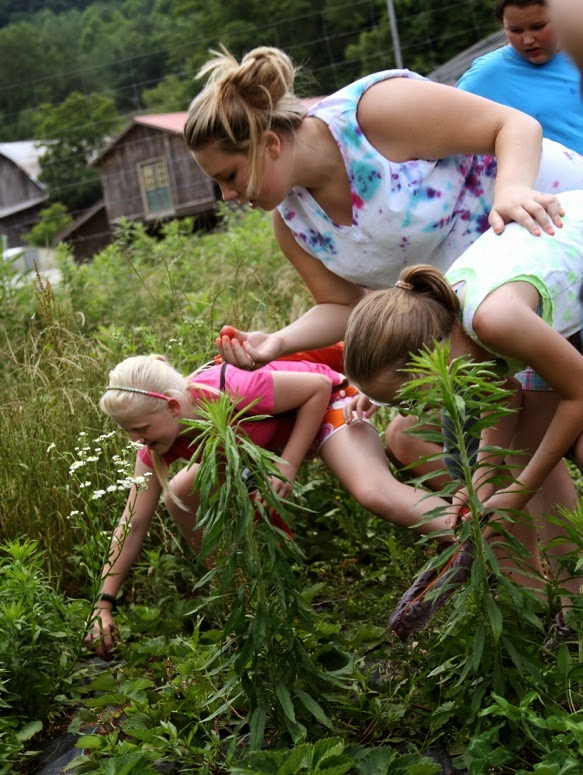
Jackson County Glean Team
It turned out Ms. Bonnie had an apple tree in her garden, and she had more apples than she knew what to do with, so Willie convened some gleaners to give Ms. Bonnie a hand. "As I climbed Ms. Bonnie's apple tree and we exchanged life stories and experiences, I was reminded of my life being homeless, [and] it reminded me of something that was embedded into my mind at a young age: everyone is a person, everyone has a message, and everyone has something to teach you, whether you [think] the information [is] valuable [at the time] or not...and this has made a world of difference in my VISTA year." This reaffirmed for Willie the importance of sharing stories and connecting with these community members in a more meaningful way.

The way Willie learns has helped him shape this shared-story approach to recruiting and training volunteers as well. "In some cases I have to teach myself how something should be done or learned...This...allows me to gain a better connection with not only myself, but [also] my volunteers. It allows me to see things from different perspectives: my struggles, strengths and weakness...I know the struggle of trying to learn the information or method, so that personal experience [helps] me to relate to them on a personal level when I’m teaching them."

Pumpkin gleaning with the Jackson County Team
Eventually, Willie hopes to have local growers and farmers, the Cullowhee Community Garden, the Campus Kitchen Garden, the food pantries at Community Table, The Market, and United Christian Ministries, and educational institutions and programs like Western Carolina University, the Appalachian Sustainable Agriculture Program, and the Dietetics and Nutrition Program at WCU, all working together. Willie notes however, that the most important group to engage is the community.

His biggest hurdle so far has been creating a gleaning calendar so that he can send out a notice to recruit volunteers a couple weeks before (as opposed to a day or two) farmers need their crops gleaned. Coordinating schedules is easier said than done, but ultimately will benefit the community with more fresh, organic produce, and benefit the farmers with a bigger tax deduction.

Revamping the Community Kitchen and gleaning the fields of local farmers is hard work. If you're interested in volunteering, and you are a WCU student, join the Campus Kitchen Garden list serve by either emailing or calling Willie. If you don't go to Western, but are interested in volunteering, join the Jackson County Glean Team Facebook page! By joining either of these groups, you will have access to weekly garden and glean reports. As soon as Willie's gleaning calendar is ready to roll, he will also be placing that information in the local paper. Make sure to read about Willie's Homecoming Food Drive and MLK Day of Service event successes too!

Willie embarked on his journey as an NC Campus Compact AmeriCorps VISTA back in August, and has been working on Campus Kitchen's organic farming part of the program since January, but Willie isn't new to the environmental or community engagement scene. In fact, his undergraduate degree from Brevard College is in Environmental Science, with a concentration in Environmental Science, and while at school, was the service coordinator for the Multicultural Center. It was here that he met and worked with several AmeriCorps VISTA members, through whom he first learned about AmeriCorps. Immediately he noticed that as an AmeriCorps VISTA, he could combine his degree with two of his other passions; higher education and service, all the while gaining valuable skills, paying off student loans, and staying in touch with his community, family, and friends.

Willie volunteering for MLK Day of Service
Outside of the office (and the garden!), Willie lists some of his favorite past times as working out, backpacking, bouldering, rock climbing, and gardening. Originally hailing from the very flat Cincinnati, Ohio, it sounds like Western North Carolina may be the perfect place for Willie! Apart from all the fun in the sun, Willie also enjoys playing with animals, taking pictures, watching Netflix and HGTV, hanging out with his girlfriend, and "EATING."

"I think my girlfriend and I spend a lot of our time, and a lot of my VISTA stipend, eating!" Willie says enthusiastically.

After completing his VISTA years, he will have the skills and tools to conquer his next challenge; graduate school. Willie plans to attend graduate school for Higher Education and Sustainability, so that he can continue helping communities grow, develop, and become sustainable. Willie Jones is taking his growth and his story with him and he has a clear vision for his future.

"I’m striving for creating highly educated and environmentally aware communities throughout the world."

Thursday, January 30, 2014

UNCP VISTA stages huge events where community is the star

"I feel like you have to have passion to do this kind of work. I have a strong passion and pride for the community that I work with here in Pembroke," says Dalton Hoffer, NC Campus Compact's AmeriCorps VISTA working in the University of North Carolina at Pembroke's Office for Community and Civic Engagement.
UNCP volunteers fill emergency food bags.

Five years ago, Dalton moved to UNCP from the small North Carolina town of Sneeds Ferry to pursue a degree in Public Relations. At first, he wasn't sure he was going to stay, because he'd been looking for an experience in a bigger school and city than the small fishing town where he grew up. After becoming involved in community service, he realized Robeson County was large and its community welcoming.  Robeson County is, in fact, the largest county geographically in North Carolina, but it also has the highest poverty rate of any county at 30.6%.

Dalton grew attached to the place through volunteering with UNC Pembroke's Office for Community and Civic Engagement, eventually becoming a student service leader. Dalton recalls, "As a student leader I developed my passion for service and empowering others to do great things [and] VISTA allows [me to continue] all of those."

Dalton checking-in students for MLK Day service projects
As an AmeriCorps VISTA, Dalton primarily does student outreach on campus to introduce students to service. He has coordinated various days of service including the Freshman Day of Service, the Back to School Bash, and the MLK Day of service where he recruited over 200 volunteers to work at 10 community organizations! Aubry Swett, Director for the CCE Office where Dalton works beautifully summarized the day's events:

"One group worked at the on campus community garden near the Pine Cottage north of campus. Two other groups worked at local soup kitchens, My Refuge and Lumberton Christian Care, preparing and feeding members in the community. UNCP's largest group worked with the Robeson County Church and Community Center (RCCCC) doing a total five projects. Those projects included but were not limited to: power washing windows, moving furniture, cutting wood, organizing the food pantry, cleaning products, sweeping and mopping the home store. This group also built a ramp at a local community member’s home, creating access for her to easily become more engaged within the community. Partnering with the Lumberton Housing Authority another group engaged local K-12 students in a Reading Party led by students from UNCP and RCCCC.  Children danced, read books, played games and did activities focused on healthy eating. Another group prepared 140 food bags and organized the clothing house for clients at Borderbelt AIDS Resource Team (BART). Other student volunteers served at the local Odum Home across the street from the University organizing and cleaning their food pantry. The group that served at the Rape Crisis Center prepared and organized 156 hygiene bags for future clients that will be in need. The last groups served at the Humane Society walking, washing, and playing with cats and dogs alike." NC Campus Compact's own Leslie Garvin, Associate Director, jumped in to the action as well, saying of the event, "I was really impressed with Dalton's organization of so many different volunteer opportunities. Tons of people turned up, and I had a lot of fun!"

Dalton & service leader Evan Long
act to engage student volunteers.
Through these one-day events, Dalton says, he hopes to "engage students to participate in more powerful and meaningful experiences." For instance, Dalton's main project is developing and implementing the Brave Impact Mentoring Program as a partnership between UNCP and the Pembroke Housing Authority (PHA). Dalton works closely with PHA's Director of Residential Services, Sandy Jacobs, to create the mentoring program so that it both fits the needs of the participating high school youth as well as appeals to other area high schoolers. On the UNCP side of things, Dalton recruited and now manages the Brave Impact TEAM, consisting of 18 UNCP students. As part of the program's design, Dalton led the students in a weekend retreat, not only to be trained as mentors but to collectively lay the foundation for what the program will look like.

Dalton recounts of the retreat, "I brought Sandy in the second night and we had a little fire where we got to roast marshmallows and create smore’s while we discussed the needs of the youth we will be working with.  I really thought I would have to kind of push or ask questions.  However, once we all circled around the fire,...just about everyone was asking questions and sharing backgrounds and personal history and I was amazed by how much passion they had and [had] developed for the program. After we talked for a while, we sat [around the fire for another hour] reflecting on the weekend so far and what our hopes for the program were.  At that point I realized that the TEAM we created was headed in a really great direction."

The TEAM now meets every other week with Dalton to develop and fine tune the programs and activities, and the program is set to launch this week!  "We expect hiccups, however we should be prepared enough to iron out the wrinkles" says Dalton confidently. As a hands-on kind of guy, Dalton loves to jump right in to his work, but for the mentoring program, his planning has paid off, and he has still gotten to implement a learning-by-doing approach by having his mentors help plan the program together! "That's why we put "TEAM" in all capitals," Dalton said. "We wanted to emphasize that we were all in this together."

Saying Dalton's only star role is his VISTA work would be a major understatement, or a minor understatement, if you take into account his minor in Musical Theatre. While an undergrad at UNCP, Dalton acted in many productions; he played Seymour in "Little Shop of Horrors," Amos in "Chicago," and Wilbur in "Charlotte's Web." Dalton says he is "planning on playing a part in the musical they are doing this spring at UNCP, “Man of La Mancha.” Dalton's passion for engaging others reaches throughout his work, whether on or off the stage. After his VISTA service is over, Dalton wants to pursue a master's degree in higher education. "I love pushing students out into the community and learning to engage in a new experience," says Dalton. "I have never had the same experience twice here in the great and powerful, yet small Pembroke, NC."

If you want to learn more about the work going on in Pembroke, NC or you want to get more involved in the opportunities Dalton and the Office of Community and Civic Engagement provide, give Dalton a call! This Spring the CCE Office will host their last UNCP Day of Service for the year on March 29th, and could be the perfect opportunity for you to engage your own passion.

Thursday, January 16, 2014

CEF VISTA empowers student volunteers to support community members

VISTA Sarah Cohn
August 9th, 2013 marked Sarah Cohn's first day of work as an official AmeriCorps VISTA at Community Empowerment Fund, but she was no stranger to CEF. In fact, when Sarah wasn't working toward her undergraduate degree in Biology from UNC-Chapel Hill, she was volunteering at CEF. Sarah first started working with CEF-Latino to keep up her Spanish fluency after studying abroad in Spain to complete coursework for her Spanish minor. She spent two years volunteering as a student Advocate, and once graduation rolled around, she couldn't pull herself away just yet. Lucky for her, two Americorps VISTA positions at CEF opened up during her last semester, so she applied for the Advocate Program Coordinator Position through North Carolina Campus Compact's VISTA program, and now has a hand in shaping CEF's future.

Initially founded as a project of UNC-Chapel Hill's Campus Y that connected students and local people experiencing homelessness, CEF is now a non-profit organization that still relies on student and community leadership. CEF offers a variety of opportunities to community members seeking a sustainable transition out of poverty through its financial education Member/Advocate pairing system. CEF pairs two volunteer Advocates with each Member (client) to work toward building assets and finding better housing and employment. Along with two volunteers, Sarah spends most of her time coordinating these pairings and continually checking in to provide support to both Members and Advocates as they work toward the Member’s goals. Not only is Sarah coordinating Advocate/Member pairs, she is also creating volunteer Advocate training, and updating CEF's Advocate/Member database. 

"I’m excited to have a part in building a Member-Advocate pairing system that runs smoothly and effectively," Sarah said. "I want to put processes in place that will allow the next Advocate Program Coordinators to be able to match Members and Advocates, follow up, and provide ongoing support to all pairings – without anyone falling through the cracks." 

CEF, founded in 2009, started off with only seven people and now that number is close to four-hundred! With its rapid growth, CEF needed a new pairing system. Before Sarah and her two volunteer recruits came on board, the Advocate Program Coordination  responsibilities were managed by one part-time volunteer!

"The VISTA program has been a great way for me to stay involved with CEF. I am so honored to have even a small part in building the infrastructure that will allow CEF to keep up with its growth in the future!" says Sarah."

Though Sarah spends much of her time and passion at CEF, outside of work she enjoys hiking, playing soccer, reading, cooking (and eating all those delicious things she whips up!) studying languages, and running around with her dogs. As for the future, Sarah doesn't yet have any steps set in stone, but she is considering what graduate school programs would be the best fit for her. In the meantime, Sarah hopes her position at CEF will help her develop professionally and learn more about social services and public policy.

"I have already learned a lot!" Sarah recounts enthusiastically. "No concrete plans yet. Maybe another VISTA term [with CEF, but] until [graduate school I] want to work in lots of different roles."

In the meantime, CEF, on the boundary of UNC's campus, is always looking for new volunteers. Approximately one-hundred and fifty students, as well as close to 40 community members from Durham, already volunteer, but new faces are always welcome. This Spring, the UNC Campus Y committee, Homeless Outreach Poverty Iradication (HOPE), from whom came the founding members of CEF, are hosting a fundraiser called "Box Out". People interested can get involved in several different ways. They can volunteer on the "Box Out" committee, sign up to be a program coordinator or team leader, or register as an individual!

"New volunteers are always welcome!" exclaims Sarah. "Being a CEF Advocate is the perfect way to spend one-on-one time serving fellow community members and, most importantly, getting to know people different from yourself. As an Advocate, I can say that working with CEF teaches many life-changing lessons, a big one being that the people you work with aren’t really different at all – we’re all in this together!"

CEF does not focus simply on serving needs; its Member/Advocate approach is about building community. Members and Advocates learn together, and Sarah learns along with them. Sarah focuses on making the best pairings possible, which requires getting to know a lot of faces. She attributes her ability to remember so many people to being a visual learner. In class, Sarah used to draw her notes out into pictures and diagrams to help her process the information, no matter what the class.

There is one big take-away for Sarah, though. "I am constantly moved by one aspect of my work at CEF above all others," Sarah says. "And that’s gratitude. Our clients express so much gratitude and positivity towards the work that we do, and volunteers are always grateful to be part of such an inspiring community."

With MLK Day right around the corner, North Carolina Campus Compact encourages everyone to find opportunities to engage with your own inspiring communities.


Tuesday, December 3, 2013

VISTA Camille Smith reaches out at Raleigh College Center

VISTA Camille Smith shares info about area colleges.
While a student at NC State University, Camille Smith often found herself working in the Raleigh community. The Anderson, SC native led her alternative break team in monthly pre-trip service with Habitat for Humanity of Wake County, interned with Stop Hunger Now, and organized campus-wide service events as co-chair of the Student Government's Community Service Commission. But since becoming the Raleigh College Center VISTA in August, Camille is reaching out to new people and organizations, and learning about the city along the way.

"One of the highlights for me so far was the 75th Anniversary of the John Chavis Memorial Park, which served as a meeting place for segregated blacks leading up to the Civil Rights movement, and a gateway for community involvement for students of local HBCUs (Historically Black Colleges and Universities)," Camille explains. "I represented the Raleigh College Center, handing out brochures and our event calendar. It was a great chance to learn the history of the area and get to know the people the John Chavis Community Center serves. It is definitely one big happy family!"

As a VISTA, Camille supports the development of the Raleigh College Center (RCC), an effort hosted by the John Chavis Community Center in southeast Raleigh. The College Center opened in 2012 as part of the Raleigh Promise. The Promise is a collaboration among local higher education institutions, philanthropies, non-profits, businesses, and the City of Raleigh. The group's goal: double the number of low-income youth in Raleigh who earn a post-secondary credential and living wage employment by 2025. As a hub of college information for youth and families, the Raleigh College Center is a key part of the effort.

During her first few months in the VISTA role, Camille has started a weekly newsletter to share RCC events and keep the Promise partners informed. She has also helped coordinate college fairs and financial aid information sessions at Chavis, and worked with the Parks & Recreation Department's Teen Outreach Program (TOPs) to coordinate college visits for groups of local teens. The College Center also offers free SAT prep courses for community youth and has laptops available on site to turn the space into a computer lab.

Camille spends several days a week at Chavis, coordinating RCC programming and collaborating with community center staff. She also works out of NC State's Career Development Center, one of the lead administrative offices for the RCC. Dr. Kelly Laraway of the Career Development Center is Project Coordinator for the Raleigh Promise and Camille's VISTA supervisor.

"I'm thrilled with the College Center, seeing how it's going in a quality direction," says Dr. Laraway. "Camille is doing great. She's innovative, focused, and brings a new perspective to the project."

Major funding for The Raleigh Promise project was provided by a grant from the Gates Foundation. Since the grant period ended last summer, the collaborative has been planning next steps for the Promise project and for the College Center in order to sustain momentum toward its 2025 goal.

Camille looks forward to increasing the College Center's outreach and program offerings in the months ahead, to creating a way to evaluate participant satisfaction, and to streamlining the coordination and tracking of College Center presenters and participants.

Though she now loves living in Raleigh, Camille took some time finding her way to NC State. After high school, she attended Virginia Union University to play volleyball, but she realized it wasn't the right fit. After transferring to State as a sophomore, she became involved in Student Government and in programs organized by the Center for Student Leadership, Ethics, and Public Service, including several alternative break experiences. Camille led two trips to the Dominican Republic during her time at State, and she credits these experiences with cementing her desire to focus on community building. After she graduated in December 2012 with a BA in Political Science and minor in Nonprofit Studies, she learned of the NC Campus Compact VISTA program and the placement at the Raleigh College Center.

In her spare time, Camille enjoys running, attending Wolfpack sporting events, and taking advantage of the many festivals and special events in the state capital. She also volunteers her community relations skills as she spends time with friends who've started a local "community conscious design and apparel company" called Boss Manatee.

To learn more about the Raleigh College Center and receive the weekly newsletter, email Camille at casmit21(@)ncsu.edu.